
How to Sell Before the Customer Reads a Single Word?




For years, Bill Gates' famous phrase has echoed through the halls of marketing firms: "Content is King." We don't disagree with this truth; words are what explain the offer, clarify the benefits, and build logical arguments for persuasion. However, in today's digitally crowded world, have you ever asked yourself: Who opens the door for this "King" to enter the palace of the customer's mind? And who paves the way for him amidst the noise of competitors? The answer is simple: It is Design.
If content is the "King," then design is the "Crown" that grants him authority, the "Throne" he sits upon, and the "Guard" that commands respect. Without professional design, your powerful content remains mere wandering text that no one notices.
The First Second That is Worth Millions
Let's speak the language of science and numbers. Modern psychological studies on consumer behavior confirm an astounding fact: The human brain processes images 60,000 times faster than text. Even more critical is what is known as the "50-millisecond impression." Research has proven that a visitor to your website judges your company's credibility, product quality, and professionalism in less than 0.05 seconds. Yes, a fraction of a second! This means your customer makes an emotional decision to "stay" or "flee" before reading a single letter of the "Royal Content" you spent nights writing.
At Apex, we don't view design as mere "decoration" or "matching colors"; we believe it is a silent sales tool and precise engineering of customer behavior. Here are the deep details on how this magical tool works to make the customer buy with their heart before their mind:
1. Design is Your "Formal Suit" and Silent Identity
Have you ever entered a restaurant and left immediately because the decor looked old and unclean, even though you hadn't tasted the food? Or imagine a brilliant lawyer entering to represent you in a fateful case, but wearing tattered, wrinkled clothes. Would you trust his ability to defend you? Most likely not. The exact same applies to your website, logo, and social media posts.
In psychology, there is the "Halo Effect," a cognitive bias that makes people judge "internal quality" based on "external appearance."
- Poor design sends an immediate message to the customer's subconscious: "This company doesn't care about details, so their services will be bad, and their technical support will be negligent."
- Professional design sends the opposite message: "We are a respectable company; we invest in our appearance because we trust our quality, and therefore, you can trust us." Design is your company's digital body language; make sure it speaks confidence and professionalism.
2. Guiding the Eye: The Art of Silent Leadership (Visual Hierarchy)
Good text tells the customer what to do, but good design takes them by the hand to do it without thinking. This is what we at Apex call "Visual Hierarchy."
When a visitor opens your site, their eyes don't read everything; they perform a quick "Scan" of the page. Here comes the role of the smart designer to manipulate this scan:
- Contrast: We make the "Buy Now" button a contrasting color to the rest of the page, so it screams at the visitor without a sound.
- Whitespace: Empty space in design isn't wasted space; it's the design's "breath." Too many elements create a "Cognitive Load" that makes the customer feel stressed and leave. Whitespace directs focus toward the most important message.
- Reading Patterns: We design elements based on natural eye movement (like the F-Pattern or Z-Pattern) to ensure the customer's eye passes over the benefits, then the price, and finally settles on the purchase button. Without this engineering guidance, the customer will get lost in a sea of text and images and take no action.
3. Color Psychology: Hacking the Emotional Brain
Colors aren't just personal taste; they are light waves that directly affect the nervous system and trigger specific hormones. Major companies don't choose their colors randomly:
- Blue: It's no coincidence that banks, Facebook, and tech companies (like Intel and IBM) use it. It is a color that evokes feelings of safety, trust, and logic.
- Red: The color of urgency, danger, and appetite. That's why you see it on "Sale" signs because it raises the heart rate and stimulates quick decision-making, and in fast-food restaurants to make you feel hungry.
- Black and Gold: The language of luxury and scarcity. At Apex, we choose your brand's "Color Palette" based on the exact feeling you want to implant in your customer's heart. Do you want them to feel excitement? Reassurance? Luxury? We translate your business goals into color codes that the customer's mind understands automatically.
4. User Experience (UX): The Peak of Respect for Customer Time
In the digital age, "Ease" is the most expensive currency. Beautiful design that is difficult to use is just a "failed painting." Complex design, small buttons, crowded menus, and unreadable fonts scream in the customer's face: "I don't care about your time! Make an effort to understand me!" The result? The customer leaves immediately for a competitor who offers an easier experience.
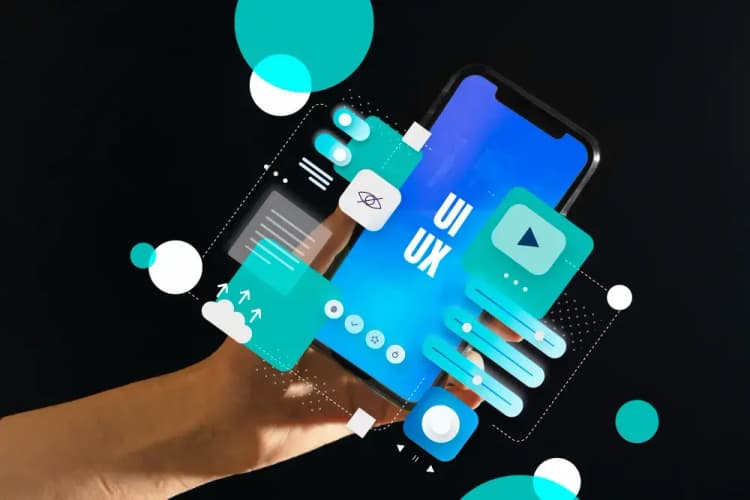
Smart design (UI/UX) removes all obstacles from the customer's path:
- Fast-loading website.
- Fully mobile-compatible (where 70% of visitors come from).
- Clear and few purchasing steps. Seamless design tells the customer: "We understand you, value your precious time, and want your comfort." This respect is what builds long-term loyalty. The customer always buys from the place that makes them feel comfortable, easy, and welcomed.
5. Added Value: Design Raises Your Price!
Did you know that meticulous design allows you to raise your prices? Look around; you'll find products with nearly identical ingredients, but the product with luxury packaging and a strong visual identity sells for double the price. Design raises the "Perceived Value" of your services. When your company looks global and professional through its visual identity, the customer won't argue much about the price because they feel they are paying for "Quality" and "Prestige," not just the bare product.
Conclusion: Don't Bury Your Treasures in the Sand
You may have the best product in the market, the strongest marketing content, and the finest sales team. But if you put all this inside a primitive website or a weak visual identity, you are burying your treasures in the sand. Don't let your wonderful words die inside a bad design. Powerful content needs a stronger, more beautiful visual vessel to carry it and present it to the world.
At Apex, we don't work as "painters"; we are "Visual Engineers." We engineer an "Acceptance Interface" for you that breaks the customer's barrier of doubt and makes them say "Yes" from the first glance.
A Message from the Apex Creative Team
At Apex, we merge color psychology with user experience engineering to produce a complete visual identity for you that:
- Grabs attention in the crowded social media space and forces the customer to stop.
- Implants immediate trust in your brand and removes customer fears.
- Guides the customer smoothly and intelligently toward making a purchase decision without effort.
- Raises the market value of your services and distinguishes you from "cheap" competitors.
Is your content ready, but your design is failing it? Do you feel your company's appearance doesn't reflect the true size of your ambition? Let us dress your project in the Crown it deserves to sit on the throne of your industry.
📞 Contact us: +968 7191 5222 🌐 View our portfolio: www.apex.ps/portfolio ✉️ Email us: [email protected]
Apex IT Solutions | Designing your identity to keep you at the peak.